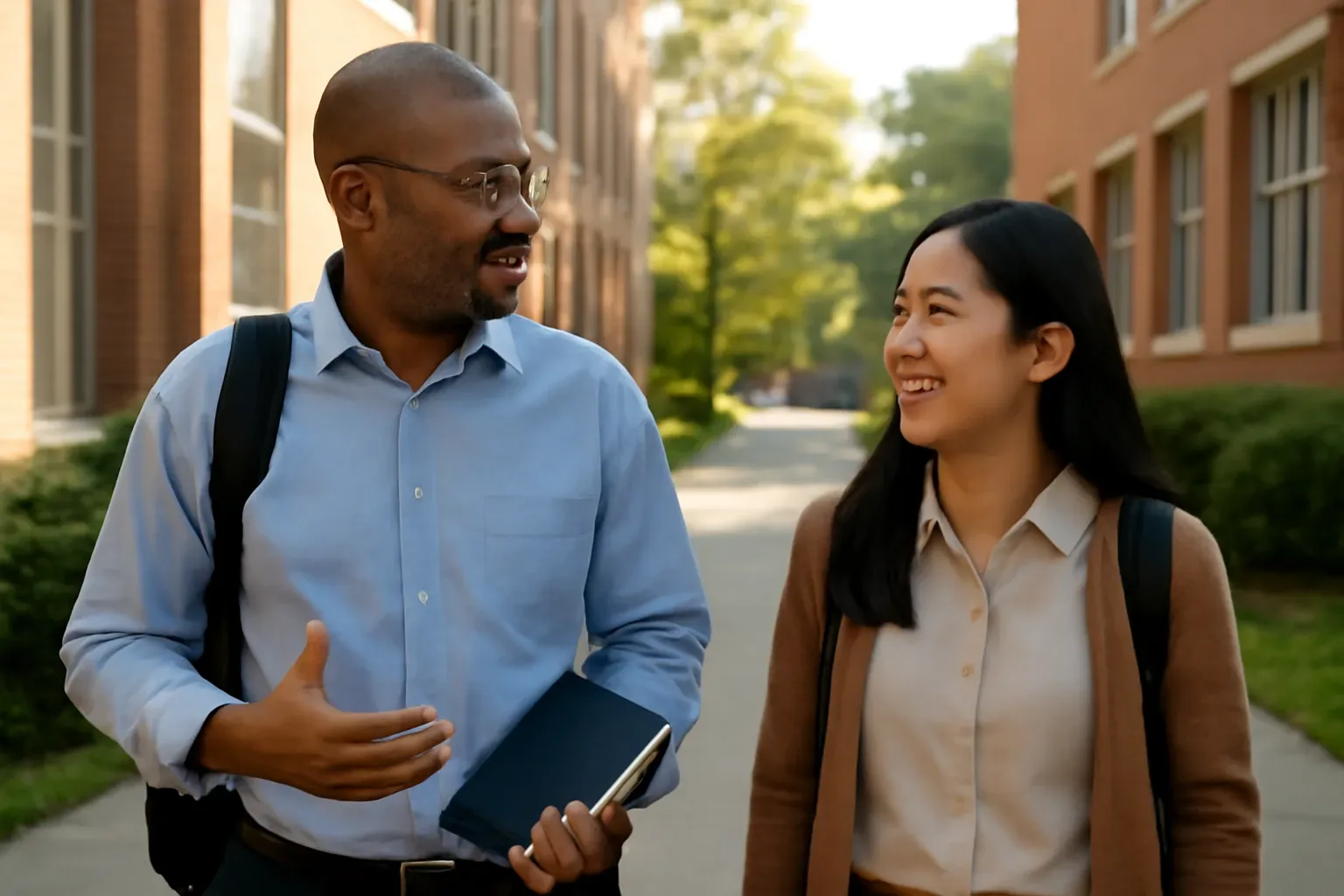
Regulations on co-supervision, joint degrees and residency differ by institution — confirm with both graduate offices before making commitments to a student.
Co-supervising with a colleague in Vietnam gives a student two research cultures, two networks and often better resources than either side could offer alone.
It also creates a specific risk: when the two supervisors disagree, the person in the middle is the one with the least power in the arrangement.
Choose the model deliberately
Informal co-supervision — the student is registered at one institution and the second supervisor contributes in practice. Simple, but the second supervisor has no formal standing at the examination.
Formal co-supervision — both named in the registration. More paperwork, clearer accountability.
A joint or dual degree — registration at both institutions with defined residency at each. This requires an institution-level agreement that typically takes many months to negotiate, so it must be started before the student enrols, not two years in.
Decide which one you are actually doing and tell the student. Ambiguity here surfaces at the worst moment — when the thesis is being submitted and it turns out one institution's requirements were never met.
Divide roles, and name who decides
Four questions, answered in writing to all three of you:
Who covers which aspect — commonly one on method, one on the subject area, or a division by chapter.
Who has the final say when you disagree. This is the question most often avoided and the one that matters. Without an answer, the student must choose between you, which is an impossible position for them.
Who tracks overall progress — one of you, so neither assumes the other is watching.
Who handles administration — reporting, extensions, the examination process.
Meeting rhythm
A structure that works in most cases: regular individual meetings with whoever supervises the day-to-day work; a three-way meeting monthly or every two months where the substantive decisions are made; and a short written summary from the student after every individual meeting, circulated to both.
That summary — what was discussed, what was decided — takes ten minutes and prevents most of the misunderstandings that otherwise accumulate.
On time zones: fix one recurring slot for the three-way meeting rather than negotiating each time, and rotate it if the difference is large. If one side is always meeting at ten at night, that side will gradually attend less.
When you and your co-supervisor disagree
You will, and it is not a problem in itself — two people with different expertise should see things differently.
What matters is that the student does not carry it.
Talk to each other directly rather than through the student. Sending a message via a doctoral candidate to a colleague who has power over their examination is not a neutral act, however it is intended.
When advice conflicts, resolve it in a three-way meeting and tell the student explicitly what was decided and why.
Watch for the student going quiet on a topic. A student who stops mentioning a chapter is often managing a disagreement between you rather than making no progress on it.
What to settle in writing at the start
Six items, ideally in a short memorandum signed by all three:
Authorship on papers arising from the thesis, including order.
Data ownership and what the student may use after graduation — this one matters to them more than anything else on the list.
Who funds what: fees, stipend, travel between the two sites, research costs.
Residency periods at each institution, if any.
Which institution's regulations govern the examination, and who sits on the committee.
What happens if one supervisor moves institution or leaves. This is a real scenario and the student should not discover the answer when it occurs.
Three things that are easy to miss
Different expectations about output. Some Vietnamese institutions require a specific number of publications before defence. If your side has no such requirement, the student is working to the stricter of the two — plan for it rather than discovering it in the final year.
Different conventions on supervisor authorship. Norms vary on whether supervisors appear on all papers from the thesis. Agree your own convention explicitly rather than assuming the student knows either one.
The student may not tell you when something is wrong. A student who is behind, stuck, or caught between conflicting advice may say nothing for months. A standing question at each meeting — what is blocked, and is anything unclear between the two of us — makes it easier to raise.
Why it is worth the overhead
Students from well-run co-supervision arrangements tend to finish with something unusual: training in two research cultures, referees in two systems, and a network that would take years to build otherwise.
And for the collaboration itself, a jointly supervised student is the most durable link there is. Agreements expire; a person who has worked with both groups for four years keeps them connected long after the project that started it has ended.
Which co-supervision model needs the most lead time?
A joint or dual degree — it requires an institution-level agreement that typically takes many months and must start before the student enrols.
What is the question most often avoided?
Who has the final say when the two supervisors disagree — without an answer the student must choose between you.
How should conflicting advice be handled?
Supervisors talk to each other directly rather than through the student, resolve it in a three-way meeting, and tell the student explicitly what was decided.
What is easy to miss across systems?
Publication requirements before defence may differ, so the student works to the stricter of the two — plan for it rather than discovering it in the final year.