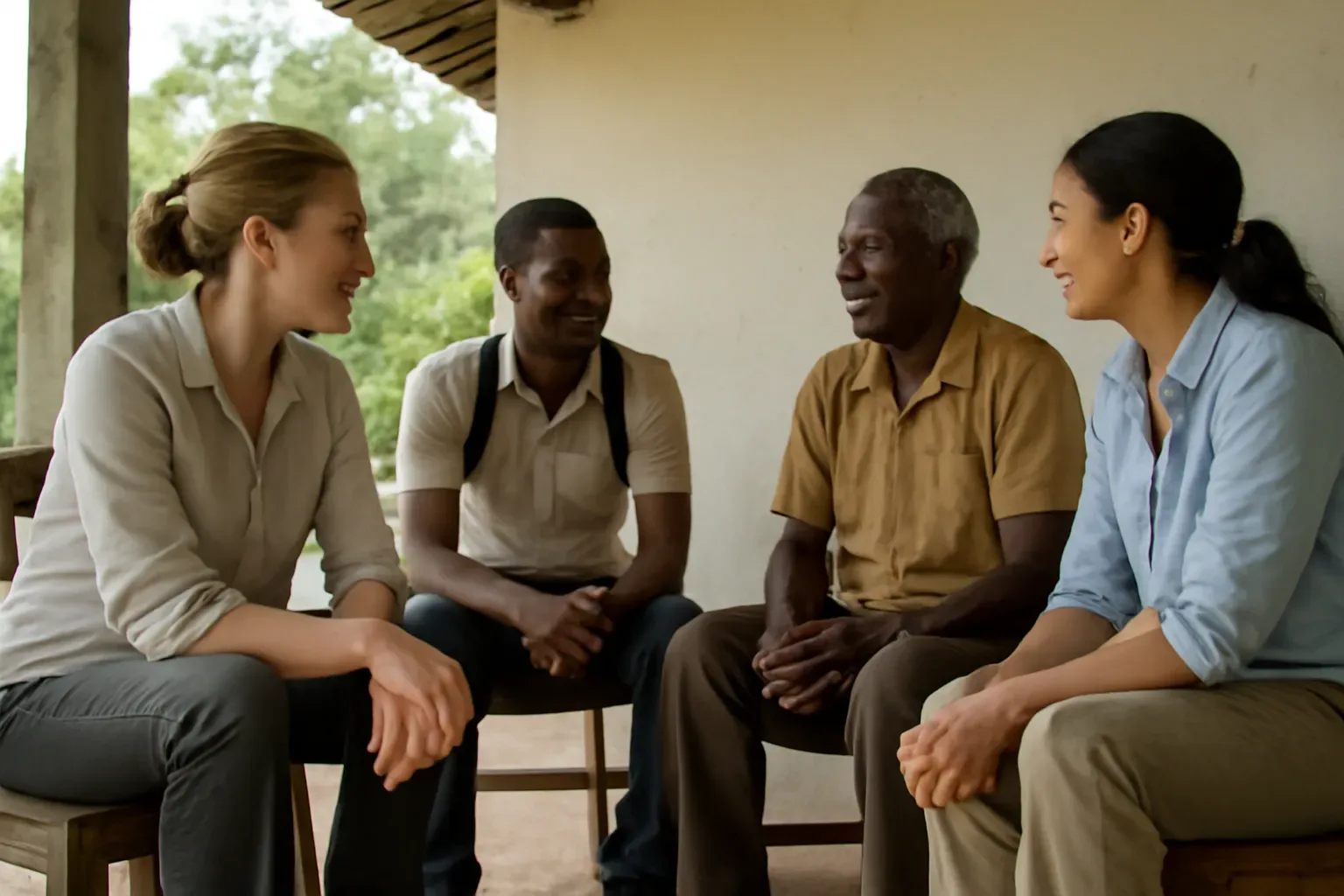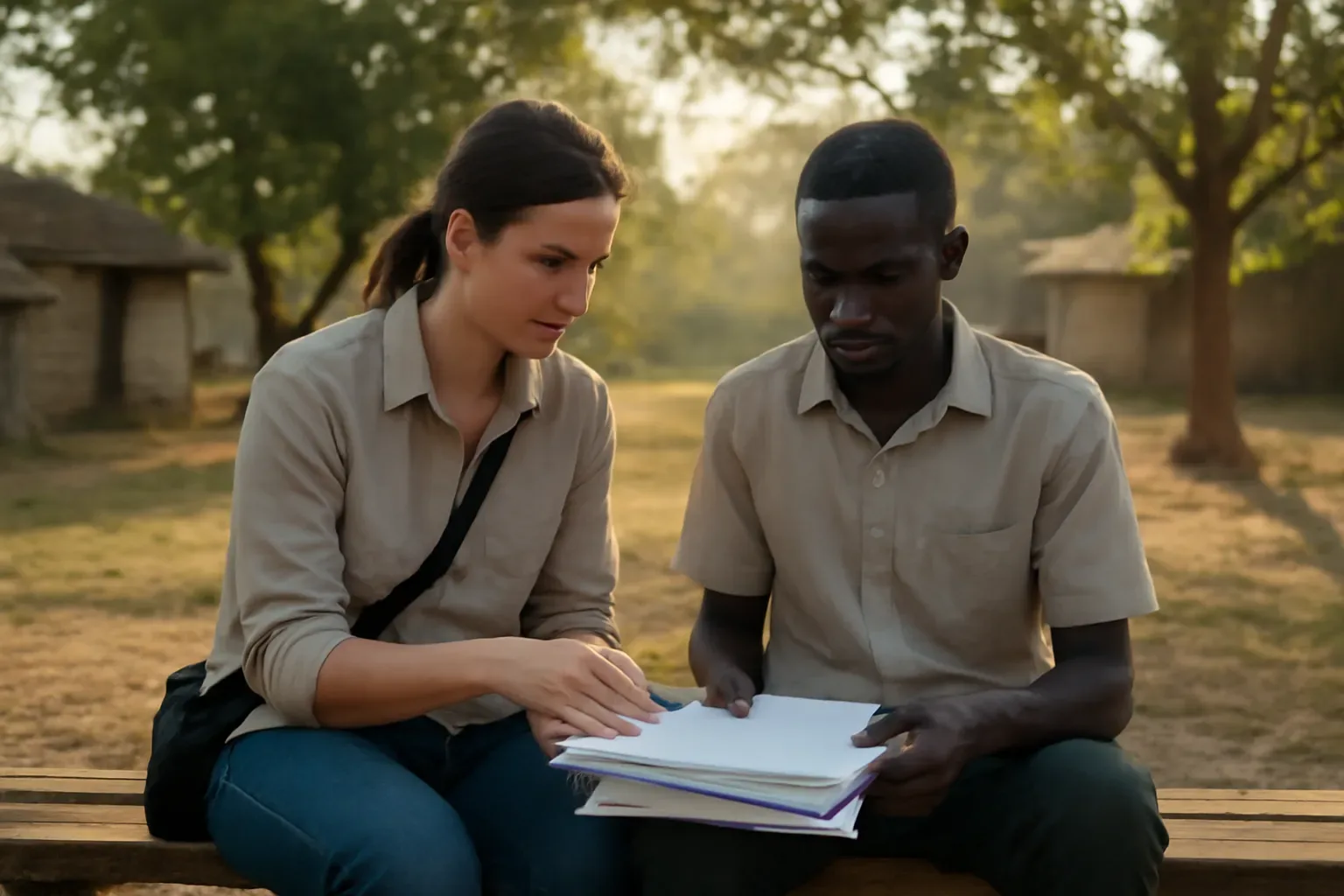
A paper reports findings from eight hundred household interviews conducted over two field seasons. The interviews were carried out by twelve people who spoke the local language, negotiated access, and handled everything that went wrong on the ground.
None of them appears in the paper.
This is common, it is usually not deliberate, and it is worth examining — because the reasoning that produces it does not survive being stated out loud.
Why it happens
Four reasons:
A narrow reading of authorship criteria. Most criteria require contribution to design or interpretation, not just to execution. Applied strictly, a person who collected data but was not invited into the analysis fails the test.
But notice the circularity: they were not invited into the analysis, then excluded for not having contributed to it. Whether someone participates in interpretation is a decision made by the people running the project — not a fact about the person.
Nobody raises it. The people in question are usually junior, often employed on short contracts, and rarely in a position to ask.
Author lists are treated as scarce. There is a sense that adding people dilutes credit, which is felt most strongly by those whose careers depend on it.
It was never discussed. By the time the draft exists, the list has formed by default.
What the criteria actually allow
Three points worth knowing:
The criteria set a floor, not a ceiling. They describe what someone must have done to be an author; they do not prohibit involving more people in the work that qualifies.
"Contribution to design or interpretation" is achievable for field staff if they are asked. The person who conducted two hundred interviews has observations about the instrument, about which questions produced unreliable answers, and about what the data means — observations no one else has.
Many journals now use structured contributor statements that list what each person did. These make the actual division of labour visible and reduce the pressure on a binary author-or-not decision.
The practical approach
Four steps, taken at the start:
Decide who is doing which part before the fieldwork. If field staff are going to be involved in interpretation, build it in — a debrief session after each field period where they report what they observed, recorded as part of the project.
This is not a formality to justify authorship. It is generally the most useful meeting in the project, and skipping it loses information that never reappears.
Write the criteria down and share them with everyone, including people who will not end up as authors. Knowing the rule in advance is the difference between a decision and a slight.
Revisit at drafting. Contributions change during a project.
Ask the partner institution how they handle it. Norms differ, and imposing your side's convention without asking is its own problem.
When authorship is not the right answer
Sometimes it genuinely is not — a person hired for a fixed task, who did it well, and had no involvement beyond it. Three alternatives that are not nothing:
Named acknowledgement with the specific contribution stated. "We thank X, Y and Z, who conducted the household interviews" is a citable, findable record.
Named in the dataset record. Deposited datasets have their own authorship, and data collectors have a strong claim to it.
A written reference from the principal investigator, offered without being asked. For someone building a career on short contracts this is worth more than a mid-list authorship, and it costs an hour.
Students
Two specific points:
A student who did substantial work on a paper should be an author, and where the paper comes primarily from their work, first author. Supervisors differ on this and the difference is rarely stated, so state it.
Decide first authorship before writing begins, not after the draft exists. Afterwards, whoever wrote the most text has an argument that is hard to counter and has little to do with whose work it was.
The question to ask
Before the author list is fixed, ask: if the people who are not on this list read the paper, would they recognise their own work in it, and would they think the list is fair?
It is an uncomfortable question because in a lot of projects the honest answer is no. But it is answerable while the paper is still a draft, and it becomes unanswerable once the paper is published.
Why are data collectors usually left off papers?
A narrow reading of authorship criteria, the fact that junior staff rarely raise it, a sense that author lists are scarce, and the list having formed by default before anyone discussed it.
What is circular about the standard justification?
Field staff are not invited into the analysis, then excluded for not having contributed to it — whether someone participates in interpretation is a decision, not a fact about them.
What alternatives exist when authorship is not appropriate?
Named acknowledgement stating the specific contribution, named authorship on the deposited dataset, and a written reference offered without being asked.
When should first authorship be decided?
Before writing begins — afterwards, whoever wrote the most text has an argument that is hard to counter and has little to do with whose work it was.