Visa rules and entry requirements change — check official sources close to your travel date, and ask the organisers what documentation they can provide.
An invitation or a call for abstracts arrives for a meeting in Hanoi, Ho Chi Minh City or Da Nang. Compared to a large international conference, the programme looks smaller and less familiar.
For building working relationships in the region, that smaller scale is the advantage.
What these meetings are like
Expect several hundred participants rather than several thousand, a mix of regional and international speakers, and more accessible senior figures than at a large meeting — you can reasonably expect to speak with most keynote speakers.
Sessions are usually in English, though some parallel tracks may be in Vietnamese. Check the programme; organisers will tell you if you ask.
A substantial share of attendees will be doctoral students and early-career researchers, often presenting posters. This is the group most worth your time if you are looking for future collaborators or recruits.
Before you commit: three questions
Who else is attending? Ask the organisers for the confirmed speaker list. A meeting where three people whose work you follow will be present is worth the trip.
Is there a structured way to meet people — a poster session with real time allocated, a workshop, a field visit? Programmes that are wall-to-wall talks leave little room for the conversations you came for.
Can you extend the trip to visit one or two research groups? This is often the highest-value part of the journey, and it costs only extra days, not extra flights.
Practical planning
Visa. Requirements vary by nationality and change periodically. Ask the organisers early for an invitation letter, and specify what your application needs it to contain.
Timing. Avoid the Lunar New Year period and the weeks around it — much of the country pauses. Ask the organisers about the local academic calendar if you have flexibility.
Payment. Ask how registration is paid and whether international cards work; arrangements vary. Carry some local currency for small expenses.
Weather. Conditions differ sharply between the north, centre and south, and between seasons. Ask what to expect for your specific dates rather than assuming.
Make contact before you arrive
This matters more at a regional meeting than at a large one, and it costs nothing.
Two or three weeks ahead, email three or four people whose work you want to discuss: say you are attending, name the specific work of theirs you are interested in, and propose a coffee during a named break.
Acceptance rates for this are high. At a meeting of this size, senior attendees are not fielding dozens of such requests.
And if you want to visit a group's laboratory or department, ask now rather than during the meeting — hosts need a little notice to arrange access and to gather the right people.
At the meeting
Go to the poster sessions and stay. The doctoral students presenting there are the people you will be working with in five years, and a genuine fifteen-minute conversation at a poster is remembered.
Attend at least one session outside your immediate subfield. Regional meetings often surface applied work grounded in local conditions that does not reach international journals, and it is frequently the most interesting content on the programme.
Ask questions that open a conversation rather than testing the speaker. At meetings where many present in a second language, a question phrased as an invitation gets a much better exchange than one phrased as a challenge.
Accept the social invitations. Meals and evening events are where most relationship-building happens, and declining them repeatedly closes off most of what the trip offers.
A few local conventions
None of these are rules you can breach seriously, but knowing them helps:
Introductions are often made through a third person; if someone offers to introduce you, accept — it carries more weight than approaching directly.
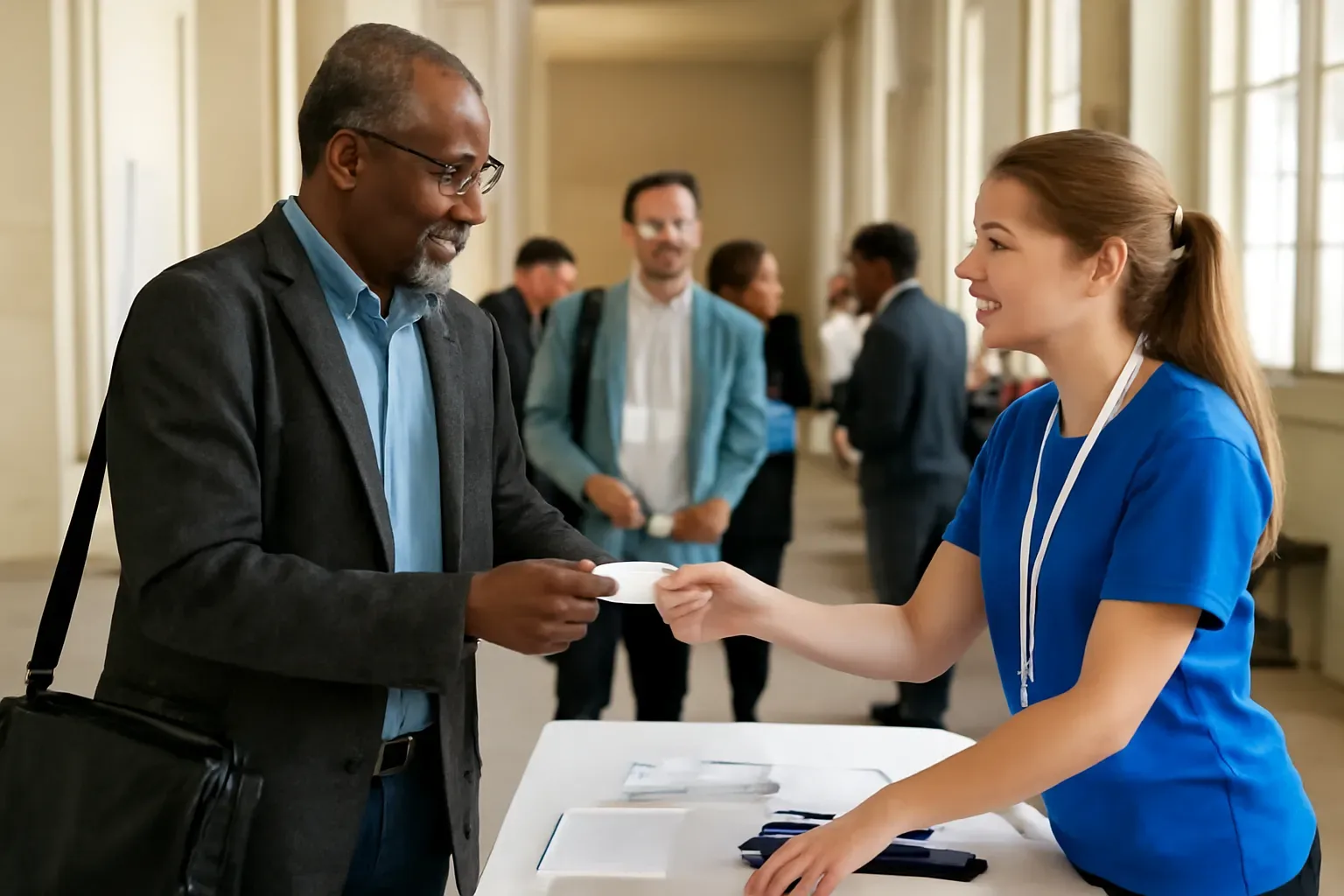
Business cards are exchanged more routinely than in some countries; bring more than you expect to need.
Hosts may go to considerable lengths for visiting guests. Accepting graciously is the right response, and a small gift from your own country is a normal and appreciated gesture.
And on seniority: at group meals, seating and toasts may follow conventions around seniority. Follow your hosts' lead rather than trying to work it out in advance.
The extension visit
If you can add two or three days, propose visiting one group. Ask to do three things: give a seminar, meet their doctoral students, and see their facilities.
The seminar is what makes the visit easy to arrange — it gives your host a reason to gather people, and it introduces your work to a room rather than to one person.
Cost to you is minimal; value is disproportionate. Most long-running collaborations in the region started with a visit of this kind rather than with a formal agreement.
Afterwards
Within two weeks, write to the people you spoke with — referencing what you discussed, not a generic note.
For anyone you might work with, propose one concrete next step: a shared reading of a paper, a joint session at next year's meeting, a specific collaboration on a specific question, or hosting one of their students.
This is the step most attendees skip, and it is the one that determines whether a trip produces anything beyond a conference badge. A follow-up email with a specific proposal, two weeks after the meeting, is worth more than the three days you spent there.
What are conferences in Vietnam like?
Several hundred participants rather than thousands, senior figures more accessible than at large meetings, and a substantial share of doctoral students presenting posters.
What should I ask organisers before committing?
The confirmed speaker list, whether there is structured time for meeting people, and whether you can extend the trip to visit research groups.
How far ahead should I contact people?
Two or three weeks — name the specific work of theirs you want to discuss and propose a coffee during a named break; acceptance rates are high at this scale.
What is the highest-value addition to the trip?
An extension visit to one group: give a seminar, meet their doctoral students, and see their facilities — it costs extra days, not extra flights.