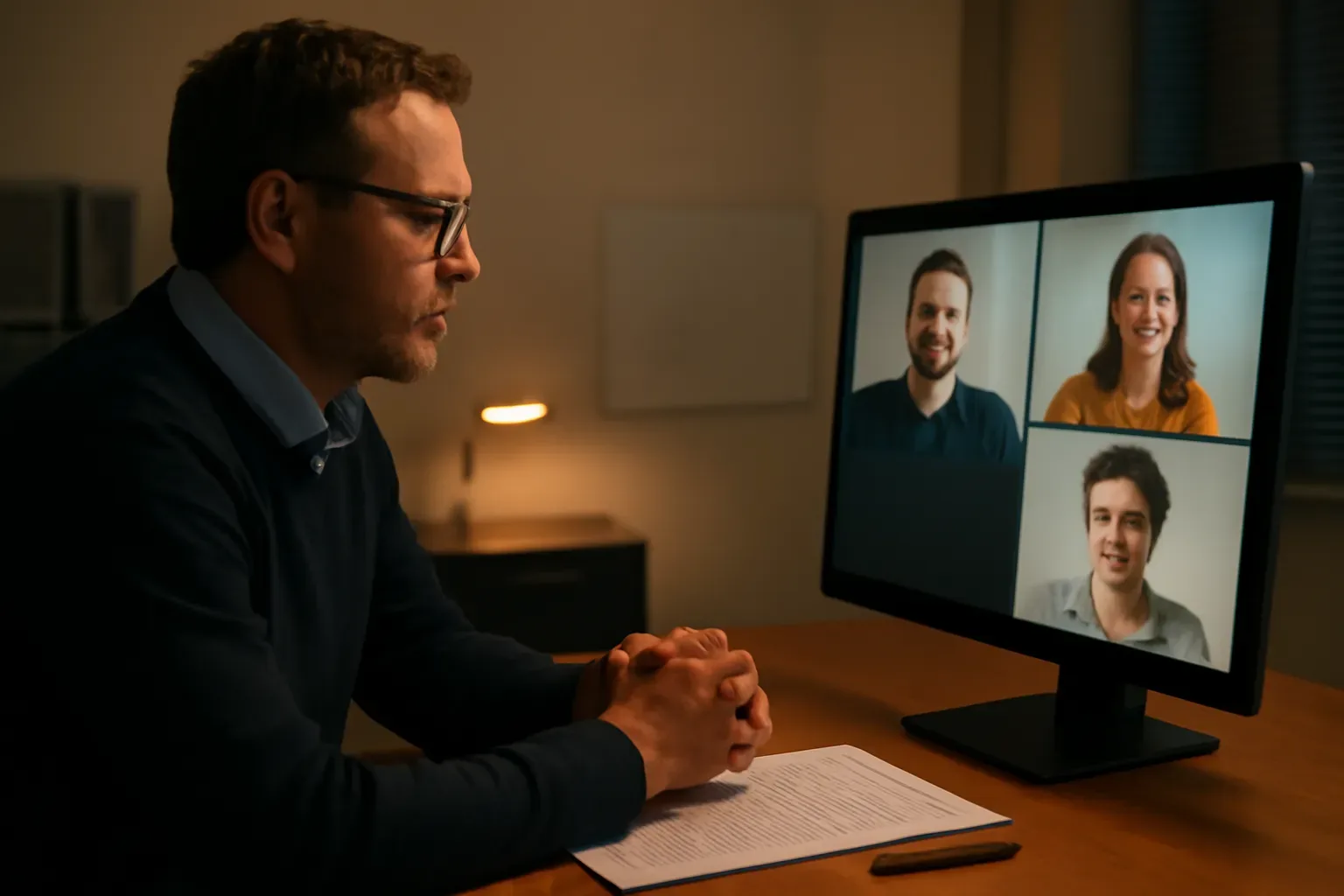
Most collaborations with a Vietnamese group include junior people on that side — doctoral students, early-career staff, research assistants. They often do a large share of the day-to-day work.
What they get back in terms of development is usually less than either side intends, and the reasons are structural rather than anyone's fault.
Why they get less than intended
Four reasons:
You interact mostly with their supervisor. The chain runs from you to the group leader to them, and by the time your feedback arrives it has been summarised twice.
They rarely speak in meetings. Seniority norms, second-language pressure, and the presence of their own supervisor all work against it — so you have little sense of what they understand or need.
Their part is defined as a task, not as a project. "Run the samples" or "collect the data" is a job; it is not something they can present, publish, or build a career on.
Nobody has been asked to mentor them. You assume their supervisor does it; their supervisor assumes the international exposure does it.
What they need beyond task supervision
Four things, in rough order of how much they matter and how rarely they are provided:
Understanding the whole study, not just their part. A person who knows only their segment cannot make judgement calls, cannot spot problems, and cannot write about it afterwards. Half an hour explaining the full design is one of the highest-value things you can do.
Direct feedback on their own work. Comments routed through a supervisor lose specificity, and often lose the encouraging parts entirely.
A piece they own. Something with a boundary — one analysis, one sub-question, one methods paper — that they can lead and put their name on first.
Visibility. Being in the room when decisions are made, being named in presentations, being introduced to people. This costs nothing and is the part most often missing.
The feedback problem
This deserves separate treatment because the usual approaches fail across a seniority and language gap.
Four practices that work:
Write it down. Written comments can be read slowly, looked up, and returned to. Verbal feedback in a fast second-language conversation is absorbed at maybe half.
Be specific about what is good, not just what is wrong. Someone who does not know which parts were right will change everything, including the parts that worked.
Separate "this is wrong" from "I would do it differently". Across a hierarchy gap, a preference stated plainly will be received as a correction, and they will not push back even when they should.
Invite disagreement explicitly and then wait. "What am I missing here?" followed by actual silence gets answers that "any questions?" does not.
Opportunities worth offering
Five, all of which cost little:
Presenting a section of the work at a meeting — even a short one, even internally. It is practice they cannot get otherwise.
Co-authorship reflecting actual contribution, decided in advance rather than at submission.
A short visit if funding allows — and if it does not, say so plainly rather than leaving it as a vague possibility they plan around.
Introductions. Connecting them to two or three people in your network is among the most durable things you can give, and it does not depend on your budget.
A reference letter, offered rather than waited for. Many will not ask; a letter from an international collaborator carries weight in applications they will make later.
Four things not to do
Do not bypass their supervisor. Direct contact is good; arranging work or making commitments without the supervisor's knowledge undermines them and puts the junior person in an impossible position.
The right pattern: agree with the supervisor that you will work directly with this person, then do so openly.
Do not treat their time as free. If you ask for an extra analysis, that comes out of their thesis time. Ask what it displaces.
Do not offer what you cannot deliver. A mentioned possibility of a position, a visit, or funding is planned around, and the disappointment is costly in a way that is invisible to you.
Do not assume silence means agreement. Ask for the plan back in their words.
One conversation worth having
Early on, ask the junior person directly: what would you like to get out of this project?
Almost nobody asks, and the answers are usually modest and achievable — a first-author paper, experience with a method, a chance to present, a contact abroad.
Knowing the answer lets you shape their part so it delivers that, usually without changing the science at all. And it is the difference between someone who did work on your project and someone whose career was changed by it.
Why do junior researchers on the partner side get less than intended?
You interact mostly with their supervisor, they rarely speak in meetings, their part is defined as a task rather than a project, and nobody has been asked to mentor them.
What is the highest-value thing to provide?
Half an hour explaining the whole study design — someone who knows only their segment cannot make judgement calls or write about it afterwards.
How should feedback be given across a seniority and language gap?
In writing, specific about what is good as well as what is wrong, separating errors from preferences, and inviting disagreement explicitly then waiting.
What conversation is worth having early?
Asking the junior person directly what they would like to get out of the project — the answers are usually modest and achievable without changing the science.